 Contact us
Contact us
Contact us
Whether in property or fashion, supercars or watches, luxury consumers are edging away from the purely material in favour of something more immersive. Everything is a “journey” now. Buying a Rolex or commissioning a Lamborghini is no longer simply about leaving the showroom with a coveted object, but about the personalised, carefully choreographed experience that precedes it. You no longer just wear Armani or Dior; you can dine in their restaurants. Travel is no longer defined by luggage alone, even if it bears the monogram of Louis Vuitton, but by the curated adventure it accompanies.
In the super-prime property world, this evolution has taken on a particular architectural expression: quiet luxury.
At first glance, quiet luxury appears to be about restraint – a softening of ostentation, a move away from overt displays of wealth towards subtlety, comfort and craftsmanship. But the shift runs deeper than aesthetics. It reflects a recalibration of how wealth wishes to be seen – or, more precisely, who it wishes to be seen by.
In an era marked by geopolitical volatility and constant digital exposure, high-net-worth individuals are prioritising privacy and control. Showy displays of affluence attract attention of all kinds, not all of it welcome. Increasingly, clients seek homes that offer discretion from the outside and extraordinary quality within – properties that reveal little to the street yet unfold internally with precision and intent.
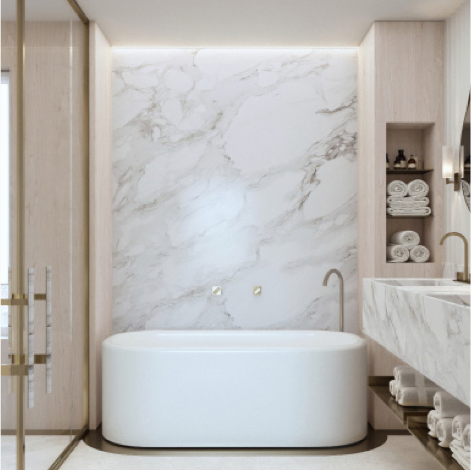
Ferraris, fine art and couture collections may still be present, elegantly displayed in gallery-like spaces, glass-walled garages or dressing rooms inspired by a favourite boutique. Book-matched marble, bespoke joinery and specially commissioned lighting installations remain non-negotiable. There is no compromise on calibre. The difference is that these features are not designed for public validation. They are crafted for private enjoyment and for a chosen audience.
In this sense, quiet luxury is less about modesty and more about selectivity. Wealth has not retreated; it has become curated.
Generational change is accelerating this mindset. In its recent Wealth Report, Knight Frank describes “Generation Wealth” – affluent individuals aged 18–35 – as prioritising travel and wellness over material acquisition. Given a significant windfall, half would choose experiences over objects. With the largest wealth transfer in history now underway, these younger voices are playing an increasingly influential role in property acquisition and design decisions.
Yet their preferences are often misunderstood. This cohort is not anti-luxury; rather, it is sceptical of conspicuous luxury. Logos and overt grandeur can feel insecure or culturally tone-deaf in an age of climate anxiety and social scrutiny. Instead, they favour longevity over novelty, sustainability over spectacle and craftsmanship over branding. They are drawn to heritage buildings, natural materials and interiors with tactile depth and acoustic and spatial intelligence – homes that feel considered rather than decorated.
There is also a broader lifestyle shift at play. Post-pandemic flexibility has redefined how prime homes are used. Large formal entertaining spaces that sit idle for much of the year are giving way to wellness suites, gyms and adaptable rooms that support daily rituals. Value-adding practicality now carries greater weight than flamboyant design.
At Rive Gauche London, we see this reflected in the briefs clients bring to us. Rather than asking how a space will impress visitors, the starting point is often how it will support everyday rituals – morning wellness routines, quiet family time or the seamless integration of work and leisure within the home. The design challenge becomes not how to add more, but how to refine.
Quiet luxury also aligns naturally with the turnkey approach increasingly favoured by high-net-worth buyers. By allowing a studio to deliver a holistic vision – from early property advice through to design and delivery — clients gain the reassurance that every element of the home will work in harmony. Firms such as Rive Gauche London specialise in this end-to-end process, guiding projects from pre-acquisition strategy through to the final crafted detail, ensuring the integrity of the concept is maintained throughout.
The result is a home that unfolds with coherence and calm, defined by warmth and nuance rather than visual noise.
Even in branded residences, where the name behind the scheme carries significant cachet, the most successful projects understand the power of discretion. Buyers investing in intrinsic quality, artisanal expertise and attention to detail do not require overt logos or gimmicks designed to generate fleeting digital attention. The confidence lies in the substance, not the signage.
We are living in an era of amplified voices – in politics, media and social platforms. Against this backdrop, the desire for sanctuary is both practical and psychological.
When everyone can broadcast their lives, the rarest commodity becomes control over who is allowed to witness them.
In that sense, quiet luxury is not the absence of wealth on display. It is wealth expressed with assurance – confident enough to whisper rather than shout, and selective about who is invited to listen.


Founder and CEO
Discover a selection of projects that have fostered Nicolas’ reputation and expertise in design and delivery.
